Showing posts with label History. Show all posts

Monday, 6 January 2014

Too simple?

I'm sitting here, feeling really clever because I knew a few answers on University Challenge.  Admittedly, one of the answers was my home town but it's enough to make me feel really clever.  We all love knowing the right answer to something but does knowing something make you intelligent?

Politicians like to think they're smarter than the rest of us.  I'd quite like to see a Politician version of University Challenge but I don't need the politician I vote for to know more stuff than anyone else.  I want her or him to be able to think, to understand the problems that people face, to find creative solutions, whilst being honest and truthful.  Is that too simple?

There have been some really scary surveys recently about how unlikely young people are to vote.  When they are interviewed they say things like, "It makes no difference,"  and "You can't trust them anyway."  They don't say, "The Politicians don't know enough stuff."

If there was anything more likely to put me off voting it would be the current argument the politicians are having about World War 1.  There is a big spat to see who knows 'the truth' about the war.  It is interesting how it all started.  Michael Gove was on Radio 4's Start the Week , being rather Govish about the teaching of History. In his opinion, there is stuff about History that is true; stuff you have to know; an order to History that is important (Greeks before Romans!) and as his children are too stupid to understand any of that unless it is taught in a certain way then all children have to be taught in that way.  I've probably oversimplified but who cares?  If you do then you can listen to it for yourself here:  http://www.bbc.co.uk/programmes/b03mcmwx.

Michael Gove looking quite simple

After Andrew Marr had got a bit upset that his guests weren't arguing more they started to discuss the First World War.  With the centenary of the war coming up countries and governments across Europe are discussing how to commemorate or celebrate (that seems like the wrong word to me) this anniversary.  I can see why it's important to not forget this piece of history and try to get the most accurate stories about the events written down now that 100 years after the event the people who were there at the time have gone.  Mr Gove, seemed quite insistent that there were some stories about this war that were just not right; that were dreamed up by lefties and Bolsheviks; that missed the point that it was all Germany's fault and that we as the master-race of English people put it all right. He was particularly upset by the most important Historical study of the era, Blackadder.  His words were then lifted for a Daily Mail article and again if I've oversimplified and you want to read it for yourself then you can read it here:  http://www.dailymail.co.uk/debate/article-2532930/MICHAEL-GOVE-Why-does-Left-insist-belittling-true-British-heroes.html.

Tristram Hunt also looking a bit simple

Michael Gove's opposite number in the labour party, shadow education secretary, Tristram Hunt (who does actually have a Phd in History, rather than a box set of Blackadder shows) felt he had to reply and show the world that he knows the most stuff about this era of History.  In the Guardian, he wrote that Mr Gove's attempt to use this period of history to wage a political war was just not cricket.  He went on to say that it might be a little more complicated than 'it was all the Germans fault.' I did think it was a bit hypocritical to say that Gove wasn't allowed to make the war a political battle and then spend half of his own article saying how the Socialists had reacted to the war.  Again, probably oversimplified and if you want to read it for yourself it;s here: http://www.theguardian.com/commentisfree/2014/jan/04/first-world-war-michael-gove-left-bashing-history

Boris Johnson giving a masterclass on looking simple.

Then today, Boris Johnson has joined the spat.  He has to prove he knows the right answers about the war.  I don't know if he managed that but he did prove that he is a brilliant writer and should have never given up journalism for politics.  http://www.telegraph.co.uk/news/politics/10552336/Germany-started-the-Great-War-but-the-Left-cant-bear-to-say-so.html  He seems to think that Tristam Hunt should resign for getting it wrong.  The Germans did start the war and to deny it to stop 'Kraut bashing' is a sackable offence.

It is entirely possible that all of these politicians have it right.  A war that lasted 4 years 2 months and 13 days that affected millions of people will have many his-stories and her-stories attached to it.  Some will seem false from another person's perspective but it doesn't make it any less of a truth to the person who witnessed it or wrote it down.  

It just doesn't matter, either.  Politicians shouldn't be sacked for knowing or not knowing stuff about History or having beliefs that are different from anyone else.  They shouldn't really have time to write articles for the Mail, Guardian or Telegraph.  They are paid at least £66,000 a year to try to make our lives better and this current spat does nothing to improve anyone's life.

Wednesday, 7 August 2013

Behind Every Good Man

While on holiday in Turkey, we were bombarded with statues, posters, flags and banknotes bearing the image of Mustafa Kemal Ataturk.  The holiday rep in our hotel told us that surnames were introduced as part of his reforms and he was given the name Ataturk because that means father of the Turks and he introduced a series of reformes to modernize Turkey, enabling it to compete in the Western world.  He changed the alphabet to a Latin script, revolutionised education, gave equal rights to women, adopted a policy of neutrality to other countries and established friendly relations with Turkey's neighbours.


This man seemed an enigma to me. My first thought was of the women behind him. His mother must have been an amazing woman to bring up a son that thought that women needed equal rights, or maybe he had a wife who guided him in these matters. Men always get a little upset when women say things like that and the Long Suffering Husband was no exception.  I had to point out that it didn't make him any less of a brilliant man, if a brilliant woman had helped and guided him but I thought it was unlikely that he would have thought about women needing rights unless he knew one who thought she did.  It would be like a dog campaigning for cats to be taken for walks. A dog would think cats like their independance to come and go as they please and may never realise that the cat is lonely unless the cat told the dog.

So, I have become a little obsessed with Mr Father of Turkey and the women behind him and have been reading everything the internet has to offer and have ordered some real books from the library.

The very first fact I read interested me, 'Mustafa Kemal was born in Salonika in 1881'.  Most of my historical knowledge is gleaned from novels and so may not be entirely accurate but from reading Victoria Hislop's The Thread, I know that Thessalonaki was an interesting place, a mix of people and religions, Muslims, Jews, Christians all lived in the same streets observing their own cultures. This must have had an influence on his desire to adopt a policy of neutrality.  The Turks still do national service and their military is very important.  Little Mustafa Kemal went to military school at 12 years old and served in the Balkan war, which tore Salonika apart and returned it to the hands of the Greeks, leaving hundreds of Muslims to flee for their lives.

At first I could only find reports of his bravery and military acheivements in his youth and then I stumbled upon his mother.  Her name was Zubeyde and she was a clever girl who could read and write.  She was given the name Zubeyde Molla, which means someone knowledgable who can teach others. Zubeyde was a devout Muslim and insisted that her son learn the Qur'an.  His father wanted him to go to the Jewish school that had a more progressive education but his mother insisted that he went to the Muslim school.  This seems like an amazing battle for her to have won, as fathers were responsible for choosing the education of their children.  Mustafa's father died when he was 6, leaving his mother to have sole parental responsiblity and they moved in with Zubeyde's brother on a farm just outside of Salonika. When it came time for the choice of secondary education she won another battle and sent her son to a community school with a progressive education system, against the wishes of her brother.  When he was 12, Mustafa took the entrance exams to go to Military School without telling his mother (aparently because he liked the uniform) and it was there that a maths teacher gave him the name Kemal, which means perfection.  They lost touch during the Balkan war but were reunited when she fled with her new husband to Istanbul.  She died in Izmir in 1923.
Zubeyde

There are only 4 women associated with this man as girlfriends/wives/lovers.  This seems quite a small number for such a powerful man but maybe they were more discrete about their affairs in those days.  The first was Eleni Karinte, who according to folk lore, fell in love with him while he was a student in Macedonia.  She is supposed to have watched him from her balcony and have been locked in the house by her disapproving father when she planned to elope.  Their story has inspired a play, film and melodrama and it does sound very much like Romeo and Juliette.

During the First World War Mustafa Kemal was stationed in Sofia (Bulgaria), where he met and fell in love with a girl called Dimitrina Kovacheva.  She had returned from studying in Swizerland and was a very accomplished musician.  Mustafa enjoyed attending her concerts and asked her father for her hand in marriage.  He refused because he didn't think she would be able to cope with the demands of a Muslim relgigion.  The pair continued to see each other and when Mustafa asked for her hand in marriage again her father quickly arranged a marriage for her and although she fainted when she heard the news she obeyed her father's wishes. She went on to have a very difficult life, as her husband was put on the list of 'undesirable elements' by the Bulgarian Communist Secret Police.  She died of stomach cancer in the seventies.

His mother had remarried and one of his cousins from this new marriage, Fikriye, became interested in Mustafa Kemal.  After she divorced her Egyptian husband she became his mistress and personal assistant.  I can't find out much about her, the internet information is all in Turkish, which google translates in the most peculiar way but what there is seems very interesting. There is a huge scandal around her death, which is related to the next woman in his life.
Fikriye

When the Turkish Army were stationed in Izmir in 1922 they used Latife Usakligil's family home as headquaters and when she returned home from University at the Sorbonne in Paris the soldiers almost refused to let her in.  This is when she met Mustafa Kemal who was 20 years older than her.  He fell in love with her and her brilliant intellect and skill as a linguist and when he returned to Izmir after his mother's death in 1923 they were married.  She seems to have been the most amazing woman.  A feminist, who encouraged him to make all the major reforms to women's rights.  She didn't wear the veil on her wedding day and was often seen in Western clothes.  She attended parliament to hear the speech they had written together, making women equal.  She was liked by women but not by men.  She is reported to have been grumpy, sour, difficult and hard work.  She was aparently jealous of Fikriye (not entireley surprising, as her husband had been sleeping with the woman for many years) and insisted that she leave.  Fikriye then died in mysterious circumstances, with the most popular explaination being that she shot herself with a gun that Mustafa Kemal had given her. Latife continued to be difficult  (opinionated?) and after an argument with her husband about his drinking went home to Izmir and while she was there he divorced her.  They remained loyal to each other for the rest of their lives and never discussed their relationship in public and her husband is reported to have continued to send her roses after their divorce.


I would like to know so much more about this woman but her diaries and papers that she wrote have been classified by the Turkish Government.  It seems to me that the problem with History is there is no room for Her-story, just in case it weakens His-story.

Monday, 4 June 2012

Whatever Happened to the Fairy Cake?

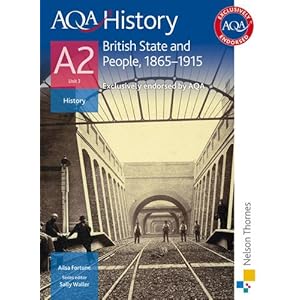
Spending the day helping with A level History revision has started my brain firing in all sorts of weird ways. From the mind mapped notes, I tested, questioned and was taught all about the History of Conservatives and Liberals between 1865 -1915. There were questions that I wanted answered that weren't in the time period and I got overly excited about the Allotment and Small Holdings Act 1892.

AQA A2 History British State and People, 1865-1915 (Aqa A2 History Students Book)

The problem with being forced to think is that it triggers more thinking.  Sometimes it would be nice to have nothing in my brain.  It would probably be nice for anyone who reads this blog too.

Today I have been wondering what happened to the fairy cake.  When I was a child, there was no such thing as a cupcake. Now, you rarely hear of a fairy cake or a butterfly cake.  Cupcake will always be an American term to me and I will stubbornly refuse to use it.  I assumed it's name came from the fact that the recipe takes equal parts of each ingredient and measures them in a cup but in American Cookery (1796)  by Amelia Simmons she mentions that cakes were baked in small pots including teacups. 
 The term cupcake appears in a book called Seventy-five Receipts for Pastry, Cakes, and Sweetmeats” in 1828 by Eliza Leslie.  There is no reference to the history of the term 'fairy cake' on the internet so I will make it up.
They are obviously cakes for fairies, who are small and need to eat small cakes.  

When we were small my mum used to make fairy tea parties for us.  We would use the china tea set from the dolls house.


The fact that the dolls house had a better tea set than we did, was purely due to the fact that these were pre-plastic days and our crockery came from the Co-op, exchanged for 125 Green Shield Stamps per piece.

We would have sandwiches made from the small Hovis loaves, grapes (pretending to be apples) and iced gems (pretending to be fairy cakes - because fairy cakes weren't small enough for real fairies.)
Taking this trip down memory lane has allowed my brain time to sort the cake name problem out once and for all.  From now on, I would like everyone to use the correct term for the correct cake.

Fairy Cake:  Small cake, baked with a sponge recipe with a small amount of glace icing on top, maybe some sprinkles or half a glace cherry.


Butterfly Cake: Small cake, baked with a sponge recipe with a small circle cut in the top.  The hole is filled with a small amount of lumpy buttercream and the circle is cut in half and the halves are shoved in the buttercream to make wings.


Muffins - This is an Amercian version of what we used to call a bun.  A small  un-iced sponge mix cake, flavoured with fruit or raisins.  The Americans being of considerably larger appetites made them much bigger and often added chocolate.  


Cupcake - Another American idea.  Just like a butterfly or fairy cake but bigger, with piles and piles of over-whipped buttercream on top.


The Americans really do have a cheek, constantly accusing the British of a sweet tooth.  They are worse, they must have just had better dentistry.